Seattle police emergency response times, October 2026
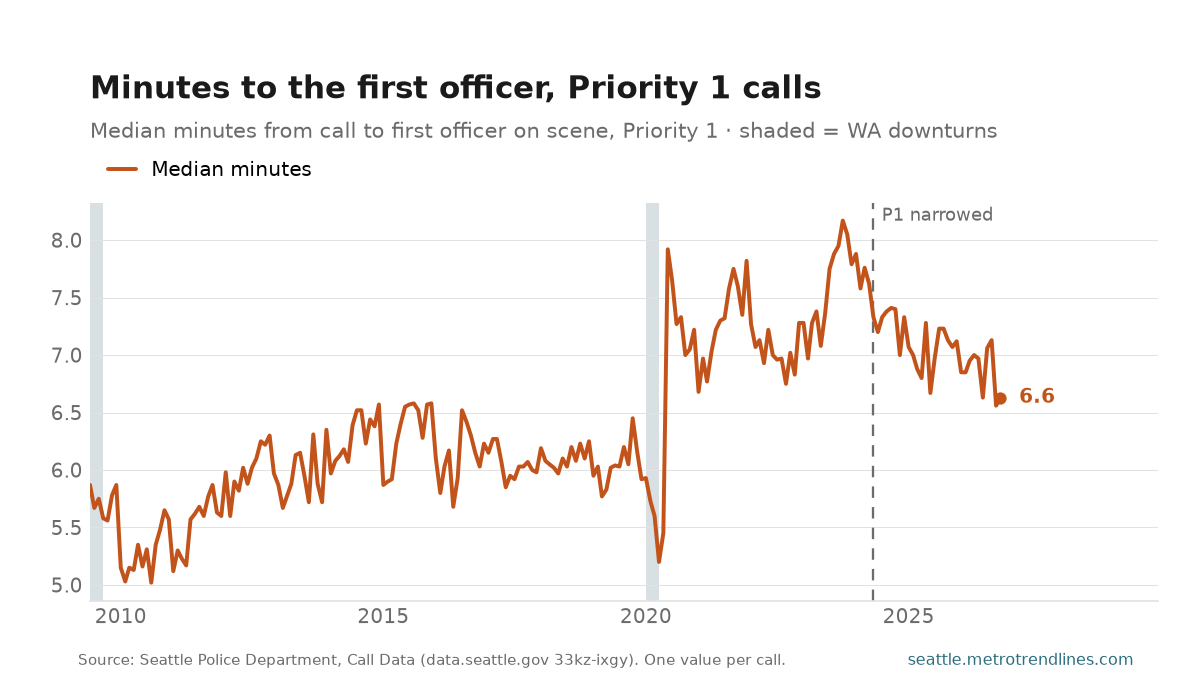
In October 2026, half of Seattle’s most urgent 911 calls had an officer on scene within 6.6 minutes of the call — 0.5 minutes faster than a year earlier. The slowest month on record is 8.2 minutes, in October 2023; the series starts at 5.9 in June 2009. Most of the rise came in one step, in mid-2020.
These are Priority 1 calls: an immediate threat to life, the tier where minutes matter most. The figure is the median, so half of calls waited longer. It counts calls the communications centre dispatched and an officer reached, from the moment the call entered the queue to the first officer arriving — SPD’s own timing — and one value per call, however many cars went. Calls an officer started in the field are left out; their response time is roughly zero.
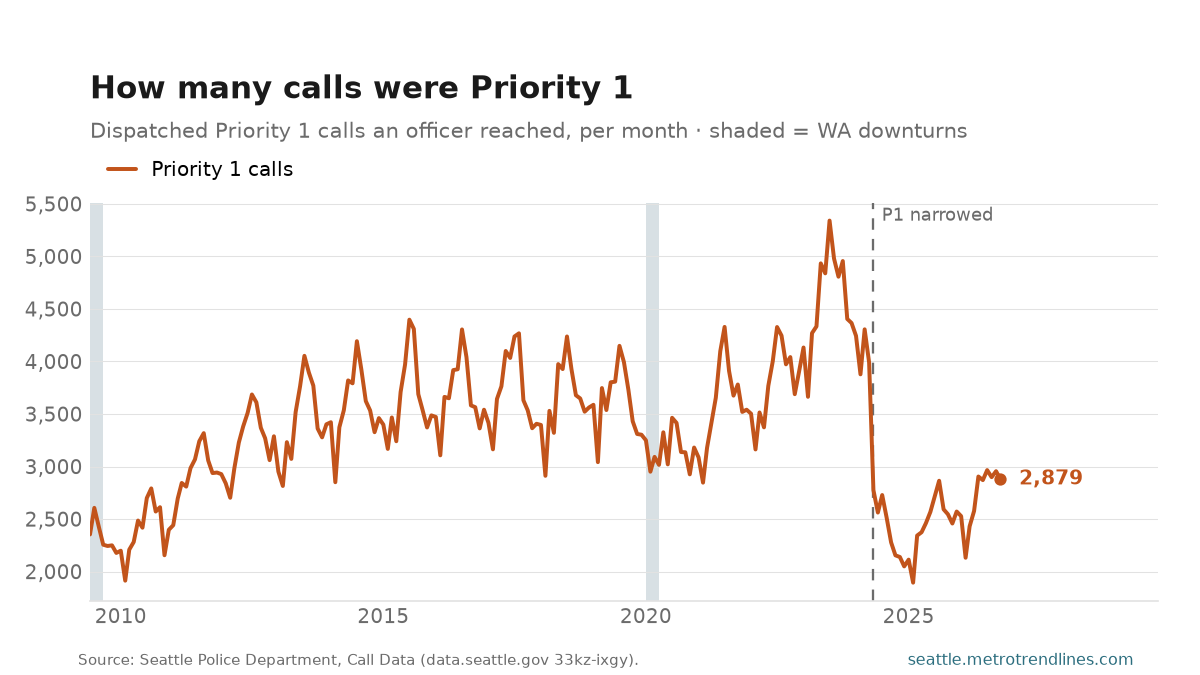
SPD narrowed Priority 1 in May 2024, and the chart marks it. Calls coded P1 fell from about 4,000 a month to about 2,700 while Priority 4 grew, so the months either side are not the same set of calls. The second chart shows the count: 2,879 Priority 1 calls in October 2026. A response time can improve because officers got faster, or because the hardest calls moved to another tier; the definition change is the second kind.
Source: Seattle Police Department, Call Data via data.seattle.gov. Priority 1 calls dispatched by the communications centre and reached by an officer; median of SPD’s first-response time per call. Calls cleared before anyone responded are not in the data. Auto-generated each build.